
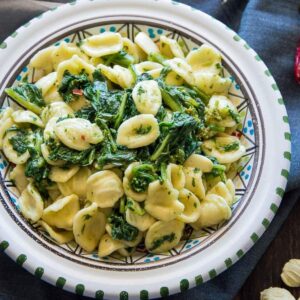
Orecchiette with broccoli rabe or orecchiette con cime di rapa (italian) is one of signature pasta dishes from Puglia in southern Italy. Tender broccoli rabe, garlic, anchovies, chilli, and good olive oil come together in one pan to make a pasta that is pleasantly bitter, savoury, and full of flavor.
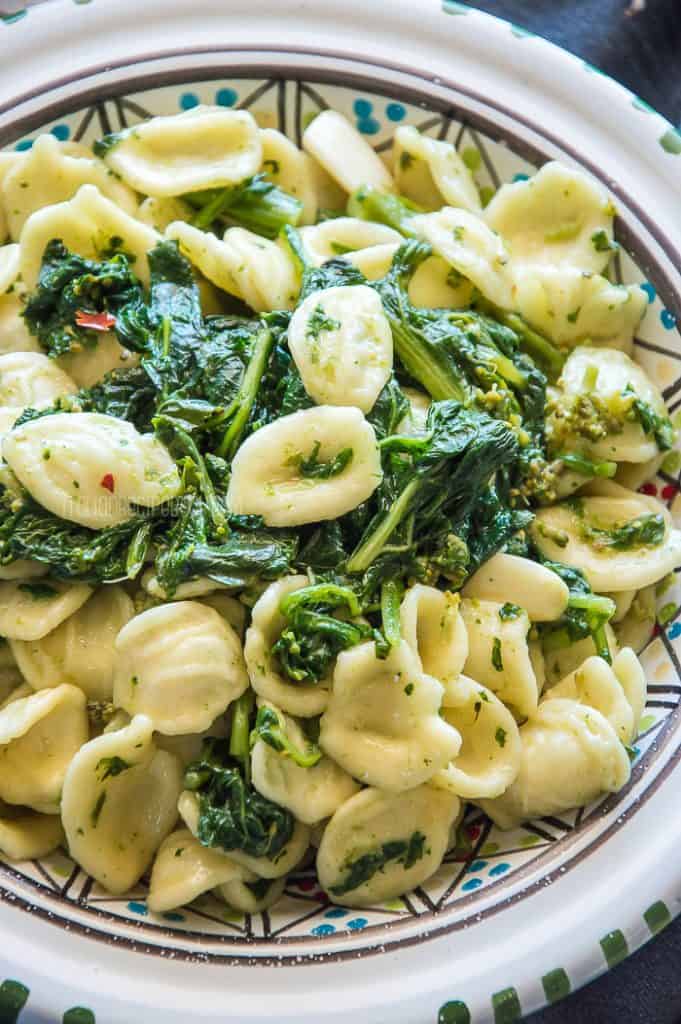
Broccoli rabe is also called rapini. Despite the name, it’s not broccoli at all — it’s a leafy green with small florets and a gently bitter edge, and that bitterness is exactly what makes it sing against salty anchovies and chili. If you think you don’t like bitter greens, this is the dish that changes your mind.
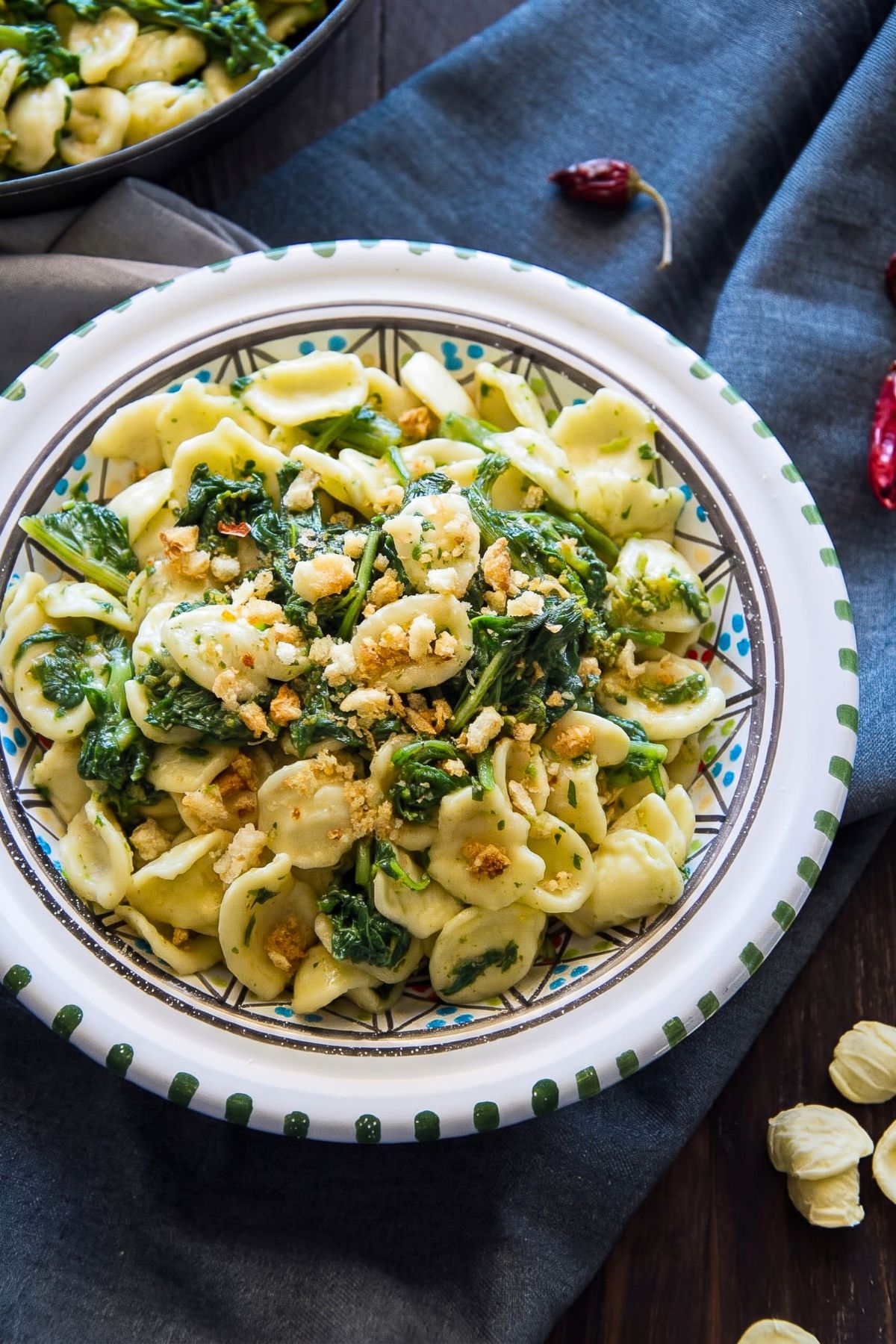
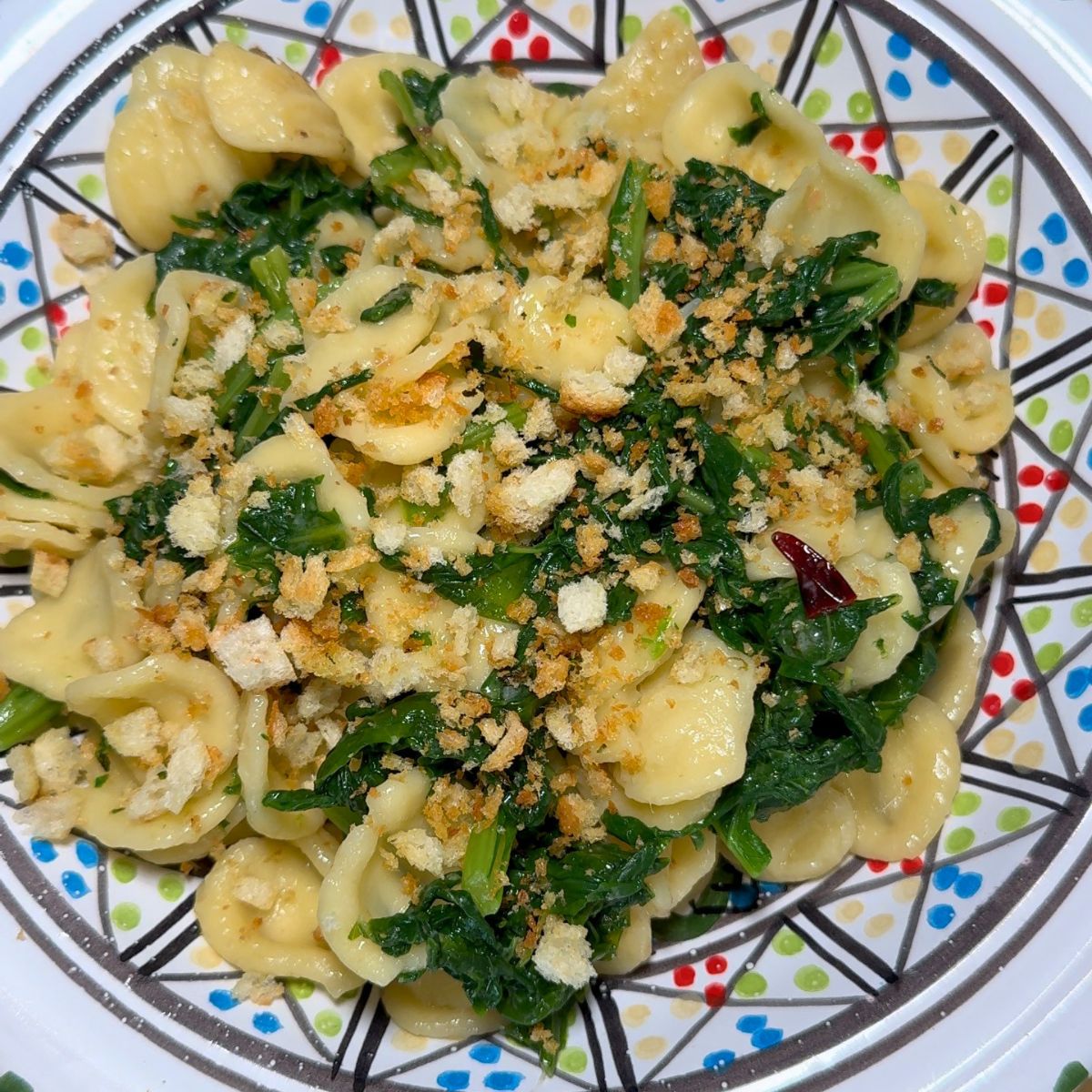
This is a quick dish, but timing matters. The pasta and broccoli rabe cook in the same pot, then finish in the garlic and anchovy oil with a splash of cooking water. The result should be glossy and lightly saucy. Instead of Parmigiano, Italians top it with toasted pangrattato for a contrasting crunch and extra flavor!
Table Of Contents
Ingredients & Notes
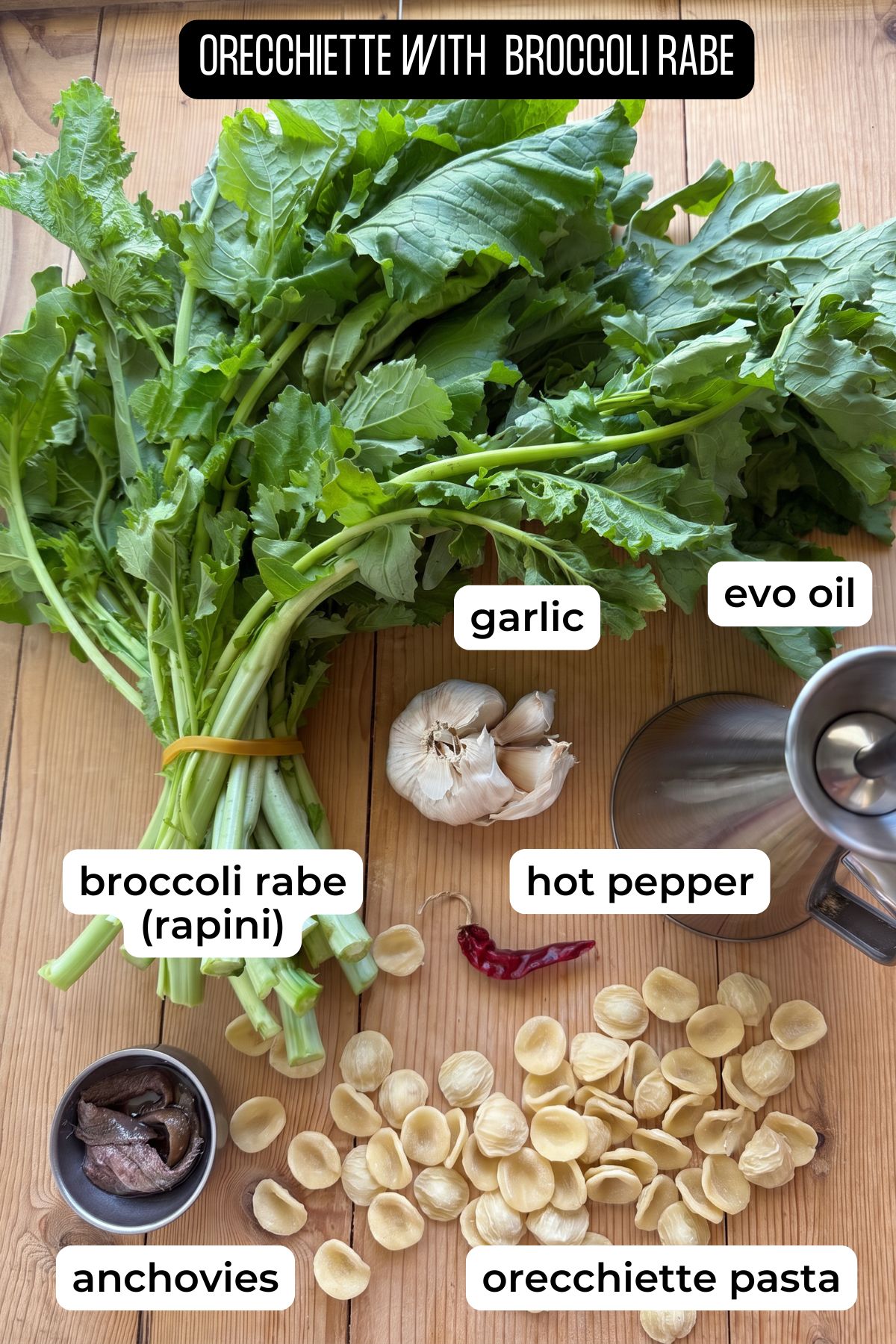
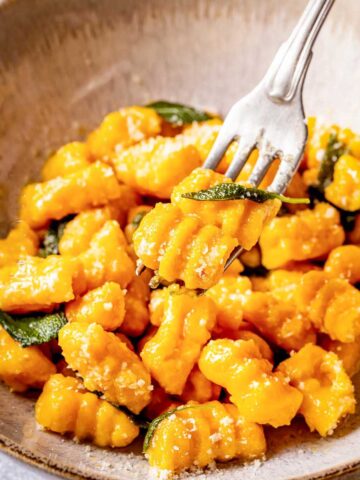
- Orecchiette pasta: Fresh orecchiette is lovely if you can find it, but dried orecchiette works very well. You can also sub them with easy to make cavatelli pasta, also typical to Puglia. Dried orecchiette also work. Note package instructions for cooking time as dried pasta needs a longer head start than fresh pasta.
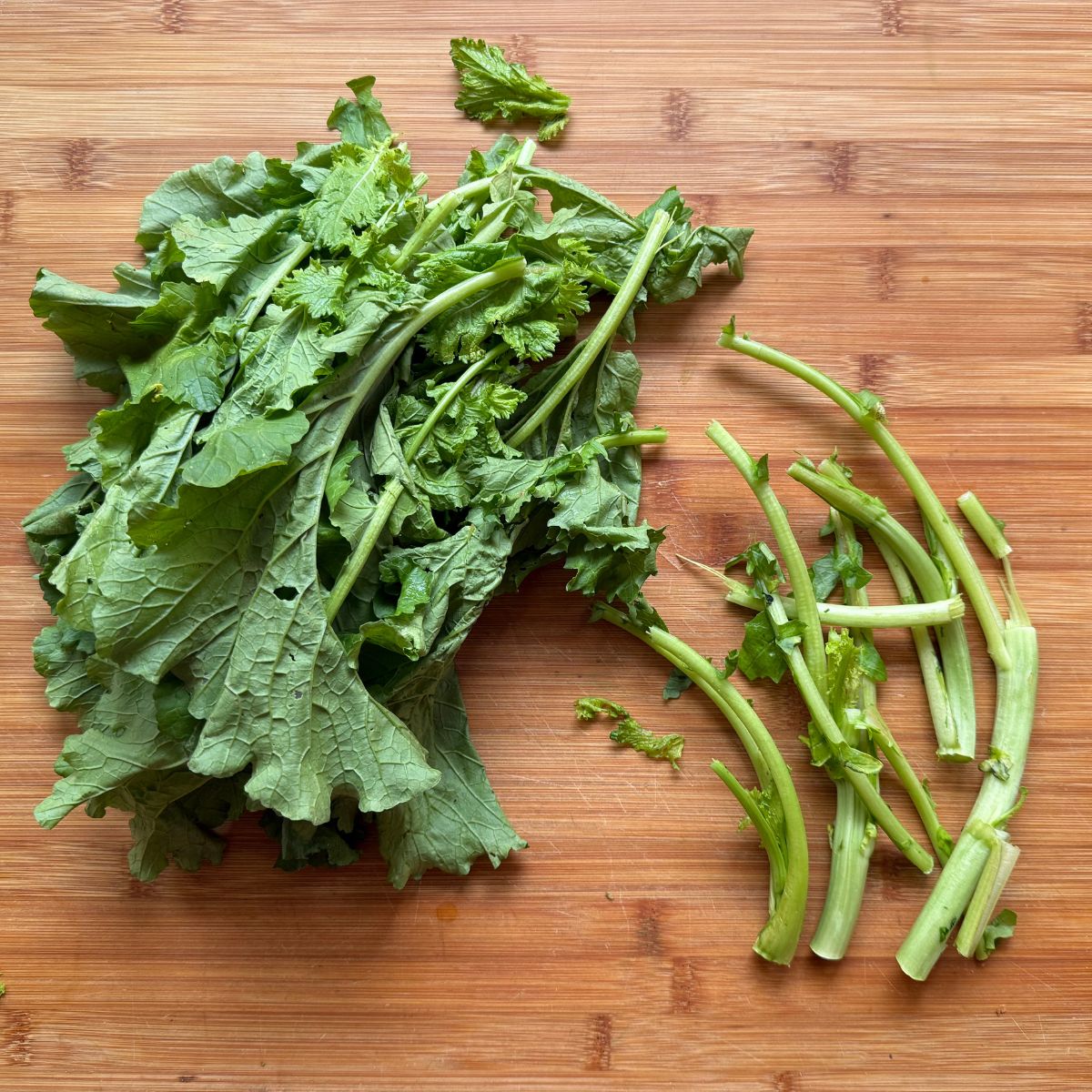
- Broccoli rabe (Rapini): Buy one large bunch, about 1 pound / 450 g. Use the florets, leaves, and tender upper stems. The thick lower stems can be tough, so trim them away.
- Anchovies: Anchovy fillets melt into the olive oil and give the dish a deep savory flavor, without tasting fishy.
- Garlic and chilli: Use medium-low heat so the garlic softens and becomes fragrant without browning. Add as much or as little chilli as you like.
- Olive oil and pasta water: Both are essential. The pasta water helps the olive oil coat the orecchiette and broccoli rabe evenly.
Variations
The classic version needs very little beyond broccoli rabe, garlic, anchovies, chilli, olive oil, and pasta. If you would like to adapt it, make one of these changes rather than adding everything at once.
- With sausage: Skip the anchovies and brown 8 ounces / 225 g of Italian sausage (casing removed) in the skillet together with garlic and peperoncino.
- With sun-dried tomatoes: I like to add a couple of chopped sun-dried tomatoes to the pan once anchovies are melted. They add a tad of sweetness and umami flavor.
- With different pasta shape: Cavatelli is another excellent Puglian pasta shape for this recipe. Cook it according to the package directions and add the broccoli rabe during the final 5 minutes.
- If broccoli rabe is unavailable: Tenderstem broccoli or broccolini is the closest easy substitute. The dish will be milder and slightly sweeter, so add the chilli and anchovies to taste.
Top Tips - Don't Miss!
- Keep only the tender parts of the broccoli rabe. Thick lower stalks stay fibrous even after cooking. Use the florets, leaves, and tender stems for the best texture.
- Use Sauteed Broccoli Rabe you've made earlier. If you have any leftovers chop them finely and add directly to the pan with the sauce. Sometimes, I make a double batch intentionally so I can use them to make orecchiette pasta the next day.
- Do not burn the garlic. Pale golden is fine.
- Save the pasta water. I prefer to lift orecchiette with a large slotted spoon instead of draining, this way I can use as much pasta cooking water as I need. Start with quarter of a cup in the skillet, then add more only if needed.
- Taste before salting. Anchovies, pasta water, and sometimes the broccoli rabe itself already provide enough salt.
- Serve right away. Orecchiette continues to absorb the sauce as it sits. If needed, loosen it with a splash of hot water and olive oil just before bringing it to the table.
What To Serve It With
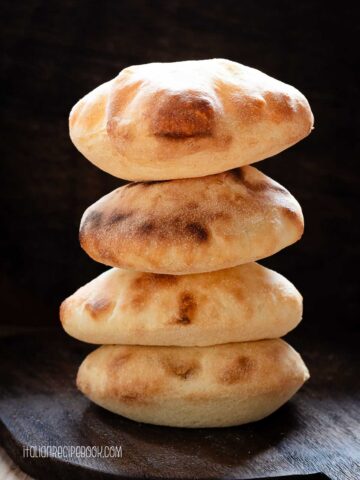
This pasta is satisfying on its own. Serve it with crusty Pugliese bread to catch the olive oil and any sauce left in the bowl. For a larger meal, pair it with grilled sausages, roasted chicken, or simple white beans dressed with olive oil and lemon.
Make-Ahead, Storage, and Reheating
Orecchiette with broccoli rabe is at its best just after cooking. You can trim and wash the broccoli rabe and prepare the garlic, anchovy, and chilli oil up to 1 day ahead; refrigerate them separately, then bring the oil to room temperature before cooking.
Refrigerate cooked leftovers in a covered container and use within 3 to 4 days. Reheat in a skillet with a splash of water and a drizzle of olive oil until hot. Freezing is not recommended.
Your Questions Answered
No. Broccoli rabe, also called rapini, is a leafy green with small florets and a pleasantly bitter taste. Broccolini is milder and sweeter, while regular broccoli has larger florets and thicker stems. Broccolini can be used when broccoli rabe is unavailable, but the final flavor will be different.
No. When gently warmed in olive oil, anchovies dissolve and add savory depth. If you strongly dislike anchovies, you can leave them out, but taste and season the finished pasta carefully.
Orecchiette absorbs liquid quickly. Add a splash of the reserved cooking water and toss again over medium heat. Finish with a little olive oil if needed, then serve straight away.
More Recipes From Puglia
Love authentic Puglia recipes? Here's what to try next:


Love Italian Food?
Sign up for our weekly newsletter to receive tips, tricks and new recipes delivered straight to your inbox!
Full Recipe
Orecchiette With Broccoli Rabe
Video
Ingredients
- 1 lb fresh orecchiette pasta , 450 grams (see notes for alternatives)
- 1 bunch broccoli rabe (rapini), about 1 lb (450 grams)
- 2-3 garlic cloves
- 4 anchovy fillets
- pinch peperoncino , more to taste
- ¼ Extra virgin olive oil , more if needed
- ¼ cup pasta cooking water , more if needed
- Salt to taste
For Toasted Breadcrumbs For Serving (optional)
- ½ cup coarse fresh breadcrumbs or panko
- 1 garlic clove , a generous glug
- Extra virgin olive oil
Instructions
Prepare the broccoli rabe.
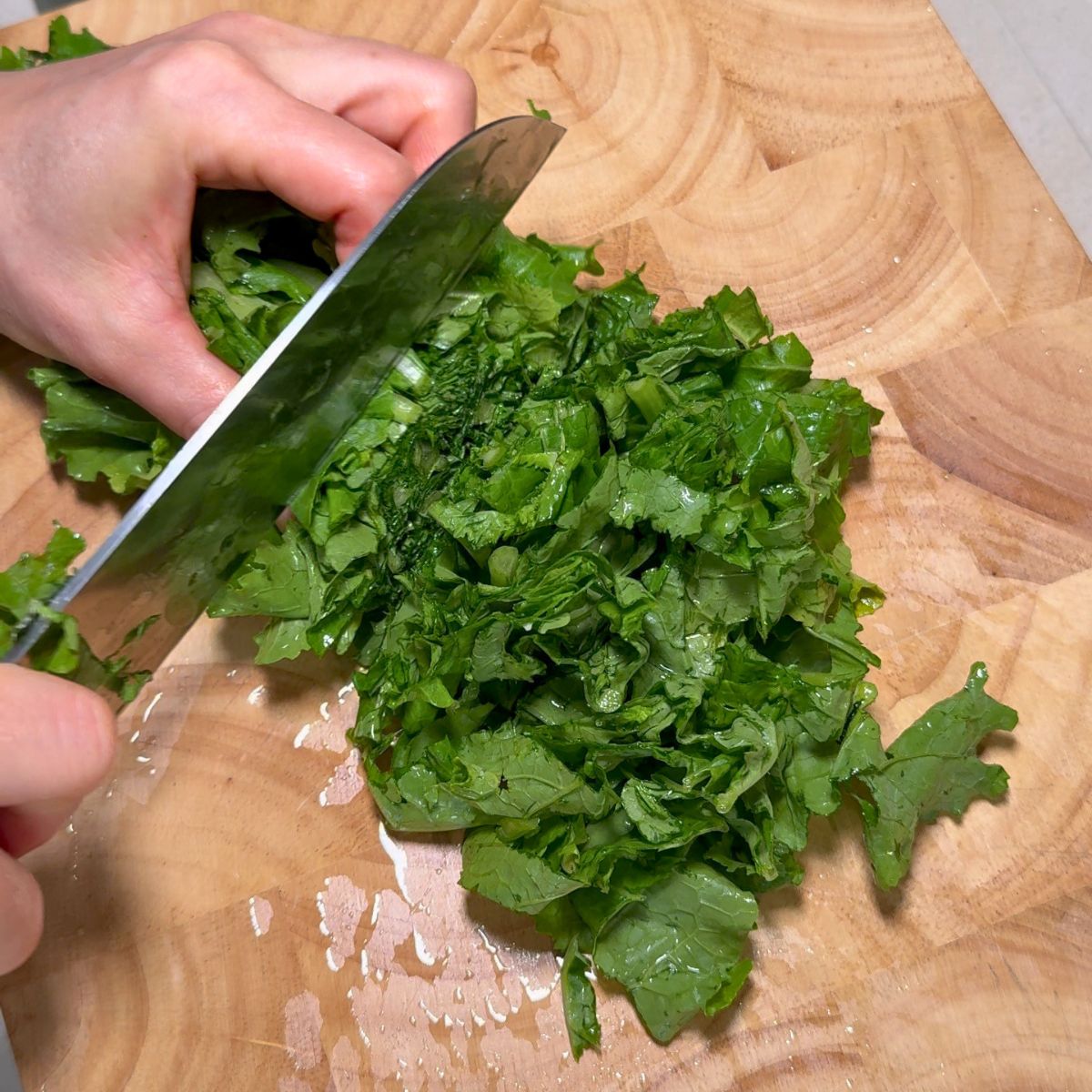
- Trim away the thick, woody lower stems. Discard any yellow and dull leaves. Keep the leaves, florets, and tender upper stems.

- Rinse well and roughly chop.
Cook the pasta and greens
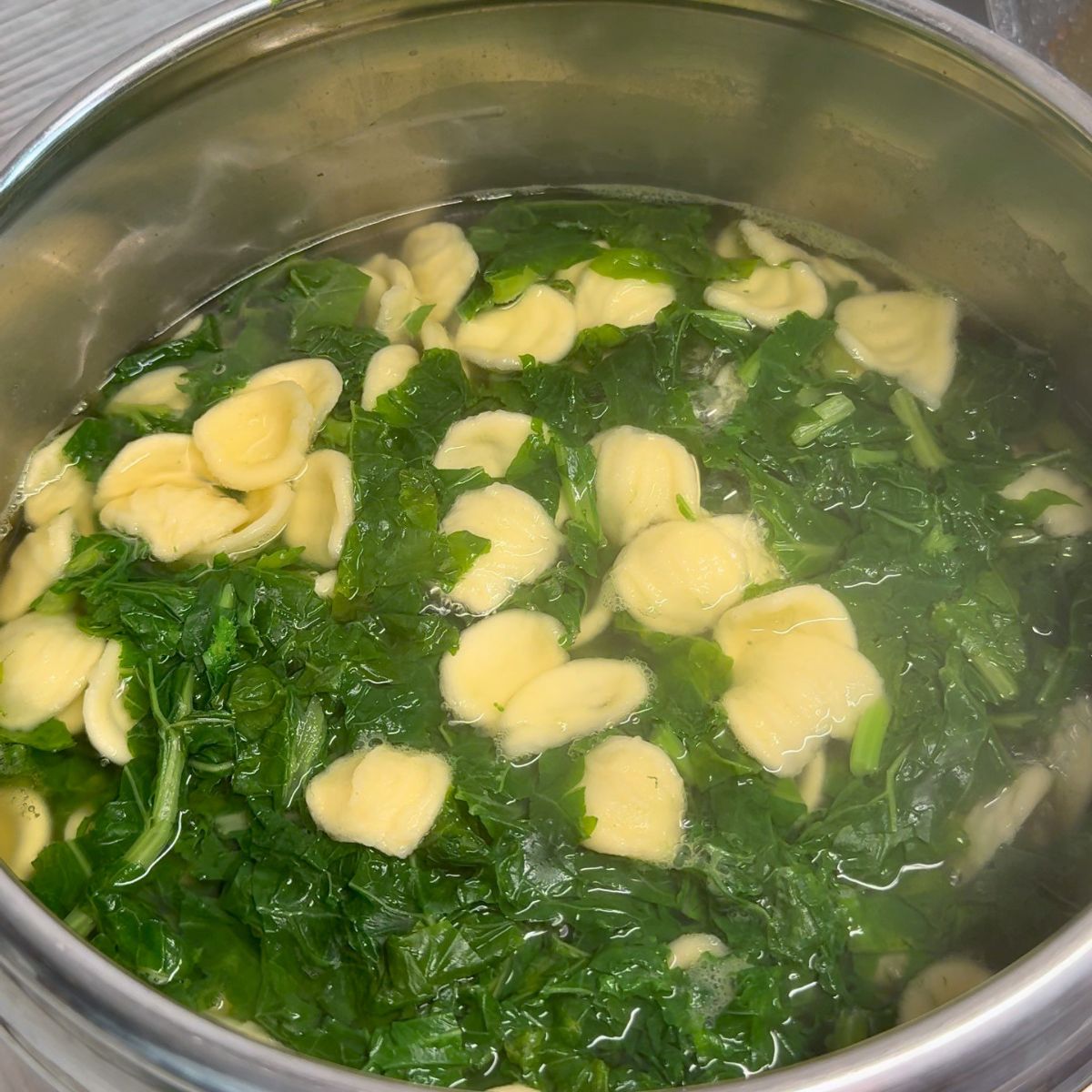
- Bring a large pot of well-salted water to a boil. For fresh orecchiette, add the broccoli rabe and the pasta and cook at the same time and cook for 5-7 minutes, until the pasta is tender but still chewy. If using dried orecchiete start it before the broccoli rabe, then add the greens for the last 5 minutes of cooking so both are ready at the same time.
Toast the breadcrumbs (optional)
- Rub breadcrumbs with a garlic clove between your fingers. Heat the skillet where you're going to make the sauce and eventually toss the pasta. Add breadcrumbs to the skillet and drizzle generously with extra virgin olive. Keep the heat on medium and cook, stirring or tossing often, for 3–5 minutes, until golden and crisp. Transfer to a small plate or bowl. Use the same skillet to make the sauce.
Make the pasta sauce and toss.
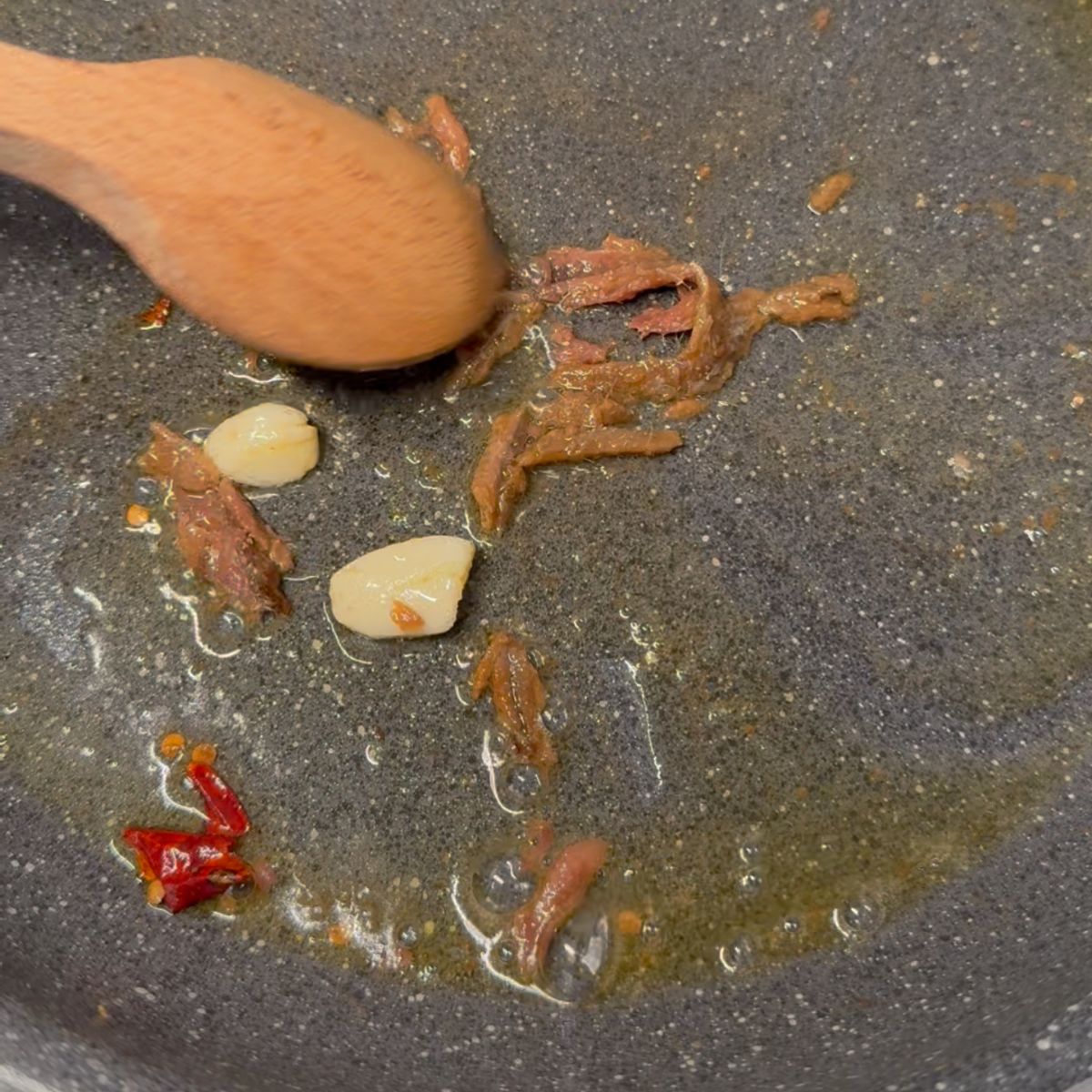
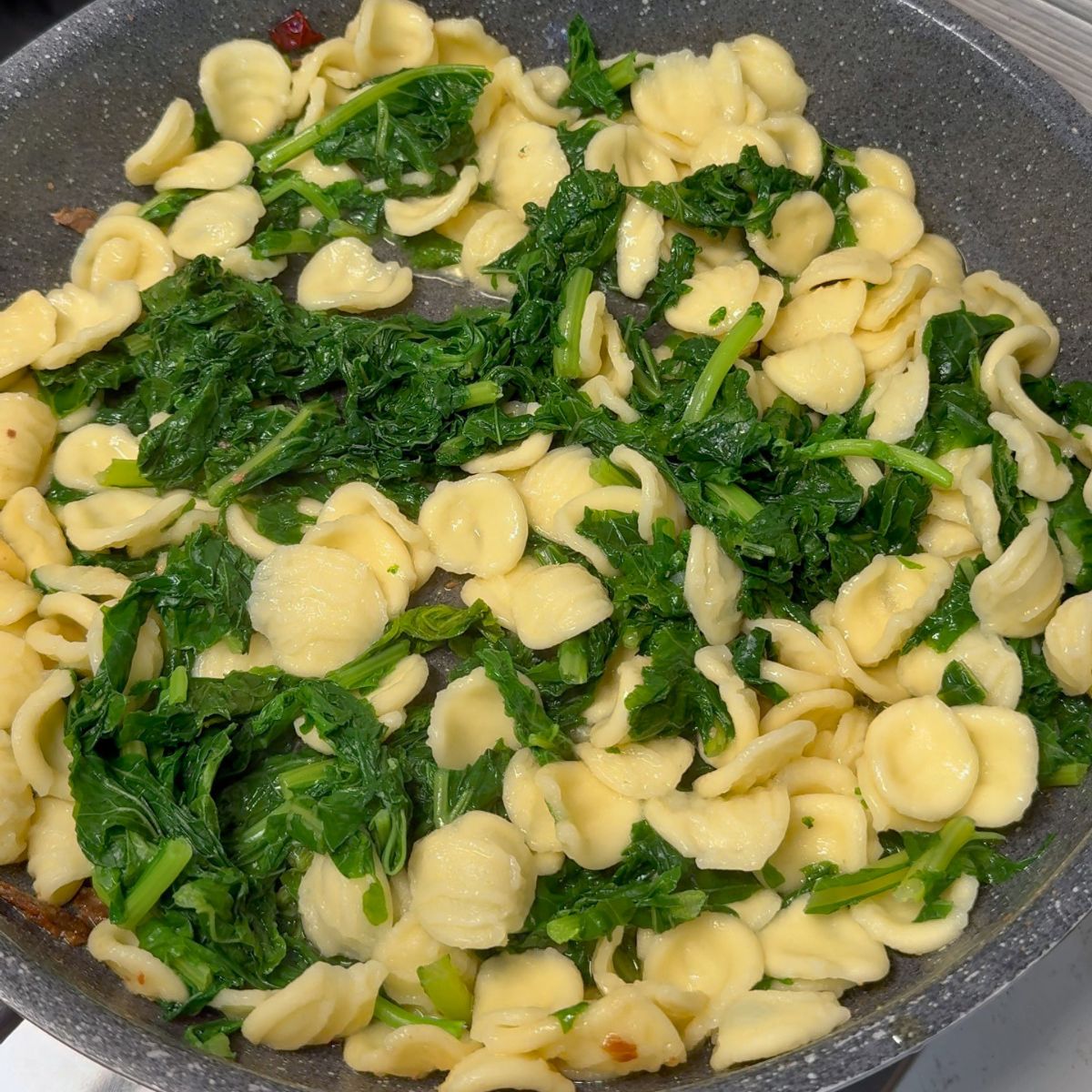
- While pasta and broccoli rabe are cooking, heat the olive oil in a large skillet over medium-low heat. Add the garlic, anchovies, and chilli flakes. Cook for 3–5 minutes, stirring and pressing the anchovies until they dissolve and the garlic is soft and fragrant. Do not let the garlic brown. Turn off the heat.
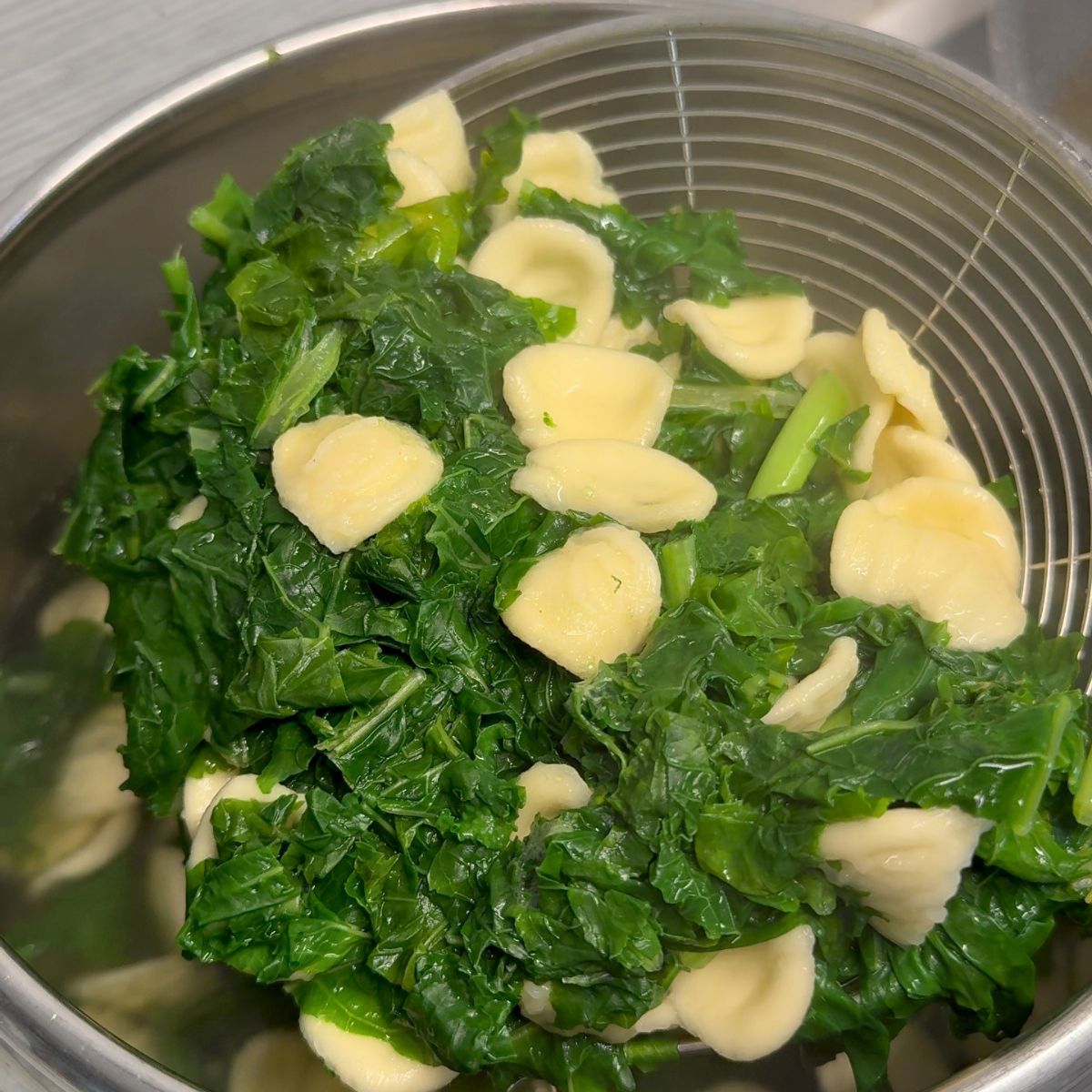
- Once pasta is cooked, drain in reserving 2 cups of the cooking liquid or do like me and lift pasta and the greens from the pot with a slotted spoon.
- Toss everything in the sauce along with some pasta cooking water for 1-2 minutes until until everything is evenly coated. Add more water (a splash at a time) and some olive oil if the pasta looks dry.
- Serve immediately with toasted breadcrumbs (optional).
Notes
- Pasta. You'll need about 4 oz (110 grams) of fresh orecchiette per person. If using dried orecchiette, it's about 3 ounces (85 grams) per person or 340 grams for 4 servings. Can't find orecchiette? Try store-bough or homemade cavatelli.
- If using dried orecchiette, start it before the broccoli rabe, then add the greens for the last 5 minutes of cooking so both are ready at the same time.
- Broccoli rabe is also sold as rapini. It is naturally more bitter than broccolini or regular broccoli, but the bitterness is pleasant and pairs perfectly with savory anchovies and hot chilli pepper
Nutrition
Nutrition information is automatically calculated, so should only be used as an approximation.
Anita says
The drained pasta liquid is essential to the above recipe! Save 1 cup when draining to thin and develop the sauce. And double the anchovy and garlic, both chopped to saute. No question of removing garlic.